
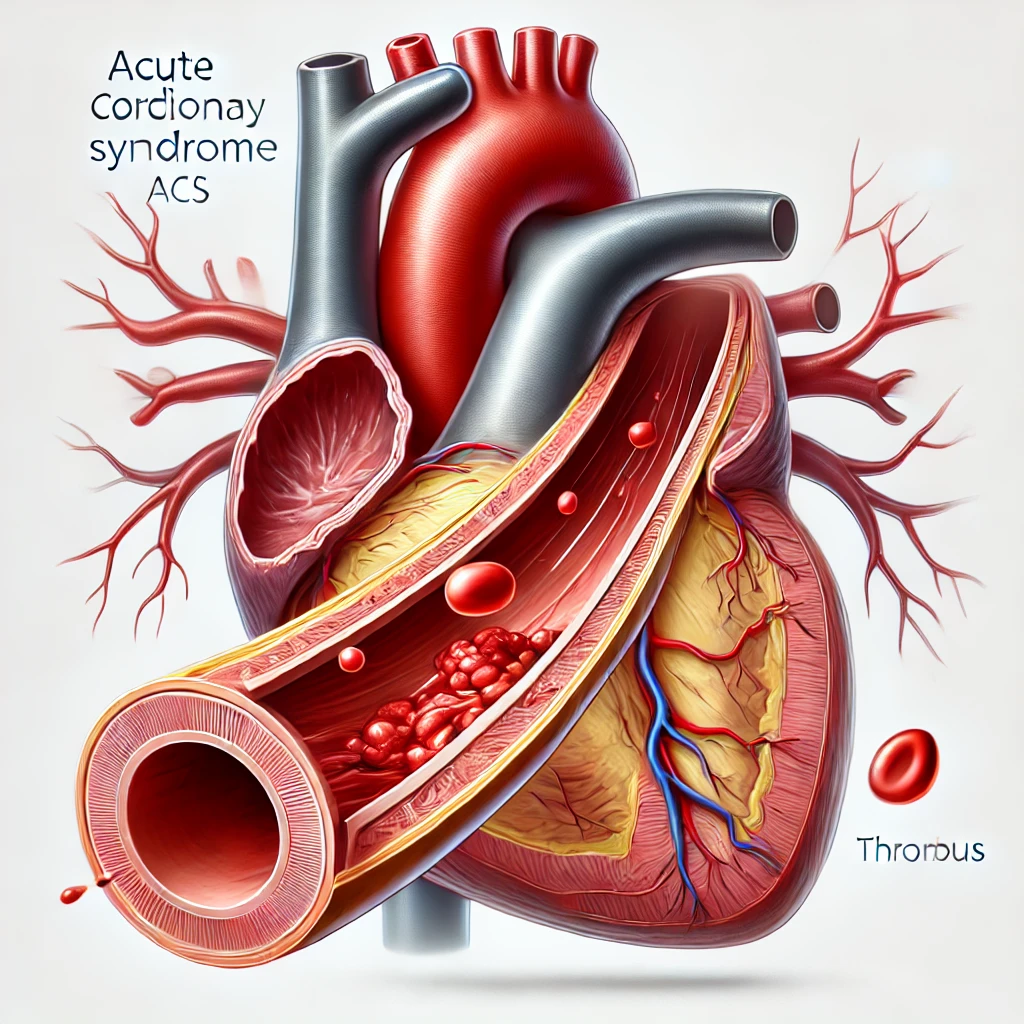
Acute Coronary Syndrome (ACS) is a medical condition that occurs when blood flow to the heart muscle is suddenly reduced. This reduction in blood flow can cause damage to the heart, and in some cases can lead to a heart attack or other heart disorders. ACS is an emergency condition that requires immediate treatment to prevent further damage to the heart.
The main cause of Acute Coronary Syndrome is thrombosis, which is blood clotting that occurs in the coronary arteries. Coronary arteries are blood vessels that supply blood to the heart. Thrombosis usually occurs in blood vessels that have narrowed due to the buildup of fatty plaque, known as atherosclerosis, and this condition is often found. This fatty plaque can make the walls of the blood vessels narrower, obstruct blood flow, and trigger blood clots that can block blood flow to the heart.
Types of Acute Coronary Syndrome
Acute Myocardial Infarction (AMI)
Acute myocardial infarction (AMI) is a medical condition that occurs when there is death of heart tissue due to severe blood flow disruption. This condition is usually caused by a blockage in the coronary arteries that supply blood to the heart, so that the heart muscle does not get enough oxygen, resulting in damage or death of heart cells.
Unstable Angina
Unstable angina is a condition of chest pain that occurs due to limited blood flow to the heart muscle, but without causing permanent damage to the heart. Although this chest pain can be very disturbing, this condition has not caused damage to the heart tissue, but still requires immediate medical attention to prevent myocardial infarction.
Non-ST Elevation Myocardial Infarction (NSTEMI)
Non-ST Elevation Myocardial Infarction (NSTEMI) refers to a heart attack that occurs without significant changes in the electrocardiogram (ECG) recording, but there is still damage to the heart tissue. Although the ECG changes are not clear, heart damage still occurs due to blockage of the coronary arteries.
ST-Elevation Myocardial Infarction (STEMI)
ST-Elevation Myocardial Infarction (STEMI) is a more severe form of heart attack, characterized by significant changes in the ECG recording and more extensive damage to the heart muscle. STEMI occurs when a blockage in the coronary artery causes more severe damage to the heart muscle, requiring rapid and intensive medical intervention.
Risk Factors for SKA
Unrepairable:
Age
As age increases, the risk of heart disease, including acute coronary syndrome, increases. This risk is higher in younger men than in women.
Gender
Men have a higher risk of heart disease, especially at a young age. However, after menopause, the risk in women increases.Family History (Genetic)
Having a family member with heart disease can increase a person's risk of developing a similar condition, due to inherited genetic factors.
Repairable:
Hypertension (High Blood Pressure)
High blood pressure can damage blood vessels and increase the risk of heart attack, but with proper management, this condition can be controlled.
Smoking
Smoking can damage blood vessels and increase the risk of blood clots, which contribute to heart disease. Quitting smoking can significantly reduce this risk.
Diabetes Mellitus
Uncontrolled diabetes can damage blood vessels, increase fatty plaque buildup, and worsen atherosclerosis. Managing blood sugar well can reduce the risk of heart disease.
High Cholesterol
High cholesterol can cause fatty plaque buildup in the blood vessels, which increases the risk of blockages and heart attacks. A healthy diet and medication can help lower cholesterol.
Lack of Physical Activity
Lack of exercise can increase the risk of obesity, hypertension, and diabetes, all of which contribute to heart disease. Regular physical activity can help maintain heart health.
Emotional Stress
Chronic emotional stress can affect heart health, increase blood pressure, and promote unhealthy habits such as smoking or overeating. Managing stress through relaxation techniques or counseling can help reduce the risk.
Symptoms
1. Chest Pain (Angina):
Feeling of pressure, tightness, or heaviness in the chest
Chest pain is usually felt as a pressing, tightening, or heavy sensation that lasts for several minutes. This is a common symptom that occurs when blood flow to the heart muscle is restricted.Can spread to the left arm, back, jaw, or stomach
Chest pain often radiates to other parts of the body, such as the left arm, back, jaw, or even the stomach. This sensation can vary between individuals.
2. Shortness of breath
Difficulty breathing or shortness of breath may occur along with chest pain, because the heart is not getting enough oxygen to pump blood to the body.
3. Cold Sweat
Excessive cold sweats can appear as the body's reaction to physical stress caused by impaired blood flow to the heart.
4. Dizzy or Fainting
Significant blood flow disturbances can cause dizziness or even fainting due to a lack of oxygen to the brain.
5. Nausea or Vomiting
Some people experience nausea or vomiting when they have chest pain, which can be caused by pain or decreased heart function.
6. Extreme Fatigue
Extreme fatigue without any apparent cause can be a sign of heart problems, which cause a decrease in its ability to pump blood effectively.
Diagnosis of Acute Coronary Syndrome
Medical Anamnesis
The examination begins with taking the patient's medical history, which includes symptoms experienced and risk factors that may contribute to heart disorders, such as hypertension, diabetes, smoking, or a family history of heart disease.
Electrocardiogram (ECG)
An EKG is used to detect changes in the heart's electrical activity that indicate blood flow problems or damage to the heart muscle. This test provides important information about the heart's electrical activity.
Blood Test
Blood tests are used to detect cardiac markers, such as troponin, which increase when there is damage to the heart muscle. Other markers, such as CK-MB, can also be measured to aid in diagnosis.
Echocardiogram
An echocardiogram is a test that uses sound waves to visualize heart function, identify any damage to the heart muscle, and check the efficiency of the heart's pumping action. This test also helps to detect abnormalities in the valves or blood vessels.
Coronary Angiography
Coronary angiography is a medical procedure to directly view the condition of the heart's blood vessels using contrast dye and X-rays. This procedure is used to identify blockages or narrowing in the coronary arteries that can cause blood flow problems to the heart.
Management of Acute Coronary Syndrome
1. Initial Treatment (At the Hospital)
Initial treatment of ACS involves administering medications to reduce symptoms and prevent further damage to the heart. Commonly used medications include:
Antiplatelet (e.g., aspirin): To prevent further blood clotting.
Anticoagulant: To reduce the risk of blood clotting.
Thrombolytic: A drug used to dissolve blood clots that block coronary arteries.
Pain Relief Medication: To reduce the pain experienced by patients due to chest pain.
2. Revascularization Procedures
If necessary, revascularization procedures are performed to open blocked blood vessels, which may include:
Angioplasty: A procedure in which a small balloon is inserted into a blocked blood vessel to widen it and open up the blood flow.
Stent Placement: After angioplasty, a stent (a small metal tube) is placed to keep the blood vessel open.
3. Strict Monitoring
Patients will be closely monitored through ECG examinations to monitor cardiac electrical activity and blood tests to detect markers of heart damage, such as troponin. This monitoring aims to check the body's response to treatment and detect complications.
4. Surgical Procedures
Coronary Artery Bypass Grafting (CABG): In patients with severe blockages in multiple blood vessels, coronary artery bypass grafting is performed. This involves rerouting blood flow around the blocked section of the blood vessel using healthy blood vessels from other parts of the body. This procedure can restore adequate blood flow to the affected heart muscle.
Prevention of Acute Coronary Syndrome
1. Maintaining Heart Health
Healthy Diet Low in Saturated Fat and Cholesterol
Eating heart-healthy foods such as fruits, vegetables, whole grains, fatty fish, and foods low in saturated fat and cholesterol can help keep your blood vessels healthy and reduce your risk of heart disease.
Regular Exercise (Min. 150 Minutes/Week)
Regular physical activity is very important for heart health. Therefore, it is recommended to exercise at least 150 minutes per week, such as brisk walking, running, cycling, or swimming, to strengthen the heart and improve blood circulation.
Quitting Smoking
Smoking can damage blood vessels and increase the risk of heart disease. Quitting smoking is one of the best steps you can take to improve your heart health.
2. Controlling Comorbidities
Controlling High Blood Pressure
Monitoring and controlling blood pressure is very important to prevent damage to blood vessels and the heart. Keeping blood pressure within the normal range can reduce the risk of heart disease.
Managing Diabetes and High Cholesterol
Managing blood sugar levels in people with diabetes and controlling cholesterol levels can prevent plaque buildup in the blood vessels, which can lead to heart disease.
Maintaining Ideal Body Weight
Maintaining a healthy weight helps reduce stress on the heart and blood vessels, as well as reducing the risk of other factors such as hypertension and diabetes.
3. Reducing Stress
Practice Relaxation Techniques Such as Meditation or Yoga
Prolonged stress can affect heart health. Practicing relaxation techniques such as meditation, yoga, or deep breathing exercises can help reduce stress and improve overall heart health.
Prognosis and Recovery
1. Prognosis of Acute Coronary Syndrome (ACS)
The prognosis for SKA depends heavily on the severity of the heart damage and how quickly medical treatment is administered. The sooner treatment is received, the greater the chances of a good recovery. With proper treatment, many patients can recover and return to their normal activities after experiencing SKA.
2. Post-Infarction Recovery
Cardiac Rehabilitation
Post-infarction recovery involves cardiac rehabilitation, which can help patients restore their physical and emotional condition. This rehabilitation program includes controlled physical exercise, counseling, and health education to improve patients' lifestyles.
Close Monitoring to Prevent Recurrence
After a myocardial infarction, patients require close monitoring to track heart function and prevent recurrence. Regular checkups and medical monitoring are essential to the recovery process.
Lifestyle Monitoring and Long-Term Treatment
Adopting a healthy lifestyle and managing comorbidities such as hypertension, diabetes, and high cholesterol are very important for long-term recovery. In addition, long-term treatment, such as the use of medications to reduce blood clotting and prevent further complications, is also necessary to ensure optimal heart health.
Conclusion
Acute Coronary Syndrome (ACS) is a serious medical condition that requires immediate treatment to prevent further damage to the heart. Prompt and appropriate treatment can improve the chances of recovery and reduce the risk of more severe complications.
Risk factors for ACS, such as hypertension, smoking, diabetes, and high cholesterol, can be controlled through healthy lifestyle changes and appropriate medication. Adopting a healthy diet, exercising regularly, managing stress, and following the treatment recommended by your doctor are important steps to prevent ACS.
Modern treatment, which involves medication and medical procedures such as angioplasty, as well as long-term care, allows most patients to recover well. Therefore, they can return to their normal activities after experiencing ACS.